

Ford Explorer Vs Toyota Sequoia
Choosing between the Ford Explorer and Toyota Sequoia starts with understanding how differently these SUVs are designed to serve drivers. The Explorer is a midsize SUV built around everyday comfort, manageable dimensions, and family-friendly versatility. The Sequoia takes a larger, truck-based approach, emphasizing substantial towing capability, strong torque, and a spacious cabin. At Hardy Family Ford, we want drivers in Dallas, GA, to understand these differences before deciding which SUV better fits their family, budget, and driving habits.
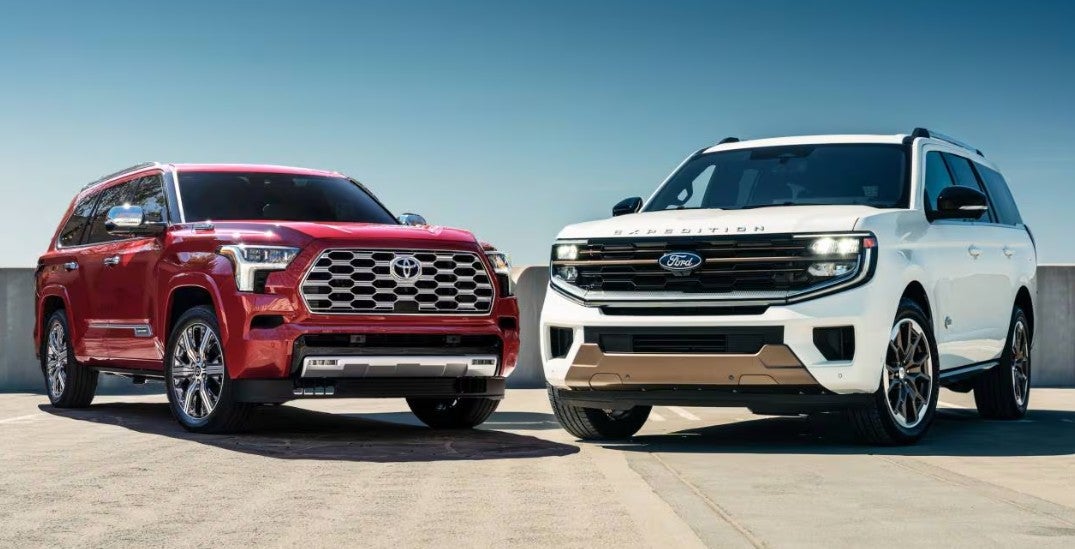
Ford Explorer Vs Toyota Sequoia Specs And Performance
The Ford Explorer and Toyota Sequoia offer two distinct approaches to SUV performance. Based on the supplied comparison figures, the Explorer starts around $38,500 to $40,000, while the Sequoia begins approximately between $64,000 and $68,000. Actual manufacturer pricing depends on the model year, trim, destination charges, and selected equipment, but the difference illustrates how much more of an investment a full-size SUV can require.
The Explorer's standard 2.3L turbocharged four-cylinder engine produces 300 horsepower and 310 lb-ft of torque. That combination provides responsive acceleration for commuting, merging onto highways, and carrying passengers through everyday errands. Its midsize dimensions can also make it easier to navigate parking garages, residential streets, and busy shopping areas around Dallas.
The Toyota Sequoia uses a 3.4L twin-turbo V6 hybrid powertrain rated at 437 horsepower and 583 lb-ft of torque in the supplied data. Its substantial torque is especially useful when accelerating with a heavy trailer or carrying a full load of passengers and cargo. Drivers who regularly need this level of power may appreciate the Sequoia's truck-oriented engineering, although its larger size may require more attention in tight spaces.
Towing Capacity: Explorer Vs Sequoia
Towing is one of the clearest differences between these SUVs. The Ford Explorer offers a maximum towing capacity of up to 5,000 pounds when properly equipped, while the Toyota Sequoia can tow up to 9,520 pounds in qualifying configurations. That additional capacity can make a meaningful difference for drivers who frequently pull larger campers, boats, or equipment trailers.
For occasional recreational towing, the Explorer may provide enough capability without requiring a full-size SUV. However, customers planning to tow heavier loads should pay close attention to trailer weight, passengers, cargo, hitch equipment, and the specific vehicle's ratings. Maximum towing figures do not apply to every configuration, so we recommend confirming the exact capacity before choosing a vehicle for regular hauling.
Passenger Space, Seating And Everyday Comfort
Passenger needs can help determine which SUV makes more sense. The Explorer typically seats six or seven people, depending on configuration, while the Sequoia offers seating for seven or eight in certain trims. Families who regularly transport several children, relatives, or friends may want to compare seating layouts and access to the third row rather than relying on passenger capacity alone.
Although the Sequoia is larger overall, more exterior space does not automatically mean every seating position will feel more comfortable. Its third-row design can limit underfloor space and may feel less accommodating than shoppers expect. The Explorer's smaller footprint may be easier to manage during daily family routines, but the best choice depends on the height of your passengers, how often all three rows are occupied, and how much luggage you carry.
Cargo requirements deserve equal attention. The Sequoia's larger body can be beneficial when transporting bulky equipment or taking extended trips with a full cabin. The Explorer offers a more compact alternative for groceries, school bags, sports equipment, and weekend luggage. Before deciding, consider whether you usually need maximum cargo volume or a balance between passenger space and easier everyday driving.
Fuel Economy And Driving Experience
The supplied figures list the Explorer at approximately 20 MPG city and 29 MPG highway, compared with 21 MPG city and 24 MPG highway for the Sequoia. These estimates suggest that the Explorer may have an advantage during highway-heavy driving, while the Sequoia's hybrid system supports its blend of power and efficiency for a vehicle of its size. Official ratings vary by model year, drivetrain, trim, and equipment, so verify the figures for the vehicles you are considering.
The Explorer's unibody construction generally supports a more car-like driving experience, which can be appealing for commuting and routine family travel. The Sequoia's body-on-frame platform is better suited to the demands of a full-size SUV designed for substantial towing. Its greater length and height also contribute to a more imposing road presence, but drivers should consider garage dimensions, parking spaces, and maneuverability before choosing a larger vehicle.
Which SUV Offers Better Long-Term Value?
The right value depends on what you will use your SUV to do. With its lower starting price, the Explorer may leave more room in your budget for accessories, maintenance, insurance, or other household expenses. The Sequoia may justify its higher purchase price for shoppers who genuinely need its additional towing capability, greater available seating capacity, or full-size utility.
Toyota's truck-based SUVs have a strong reputation for resale value, but the future value and reliability of any specific vehicle depend on its condition, maintenance history, mileage, market demand, and ownership costs. Compare warranty coverage, fuel expenses, financing terms, and the equipment included in each trim before making a final decision.
Explore Ford Explorer SUVs At Hardy Family Ford
At Hardy Family Ford, we help drivers throughout Dallas, GA, compare their options and identify a vehicle that fits their daily routine. If you need a versatile SUV for commuting, family travel, and occasional towing, the Ford Explorer deserves a closer look. If your priorities center on heavier towing and full-size capability, the Sequoia may better match your requirements. We can help you explore available Ford models, review features, and determine which Explorer configuration suits your needs.
Schedule A Ford Explorer Test Drive
Specifications provide a useful starting point, but spending time behind the wheel can help you judge visibility, seating comfort, controls, and road manners for yourself. Contact Hardy Family Ford to learn more about the Ford Explorer and explore available options. Our team is ready to help you take the next step toward finding an SUV that works for your family and your budget.