

Ford Explorer Vs Hyundai Palisade
Choosing a three-row SUV means balancing the needs of the people riding inside with the demands of your daily drive. Some families want responsive acceleration, confident towing, and the flexibility of an available performance upgrade. Others place greater importance on third-row comfort, extra cargo room, and features that make long trips more relaxing. At Hardy Family Ford, we created this Ford Explorer vs Hyundai Palisade comparison to help drivers in Dallas, GA, understand the differences between these two SUVs before deciding which one deserves a place in their driveway.
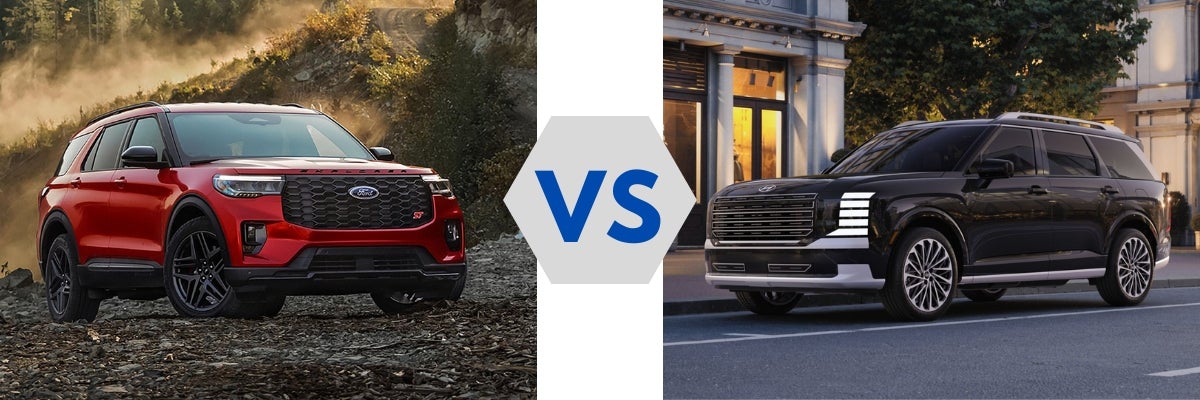
Ford Explorer Vs Hyundai Palisade Specs And Performance
The 2027 Ford Explorer starts at an estimated MSRP of $40,260 in the supplied comparison, while the 2027 Hyundai Palisade starts at $41,385. Both offer three-row practicality, but their standard powertrains take different approaches to performance.
The Explorer's standard 2.3L turbocharged four-cylinder engine produces 300 horsepower and 310 lb-ft of torque. The Palisade's standard 3.5L V6 delivers 287 horsepower and 260 lb-ft of torque. That gives the Ford an advantage in both standard horsepower and torque, which may appeal to drivers who want responsive acceleration when merging onto highways or carrying a full cabin.
Drivers who want more power can consider the Explorer's available 3.0L twin-turbocharged V6, rated at 400 horsepower. Hyundai offers a different upgrade path with an available 2.5L turbocharged hybrid powertrain producing a combined 329 horsepower. The Explorer emphasizes performance, while the Palisade hybrid prioritizes a balance of power and fuel efficiency. The right choice depends on whether stronger acceleration or reduced fuel consumption matters more to your routine.
Ford Explorer Vs Hyundai Palisade Towing Capacity
Both SUVs offer a maximum towing capacity of up to 5,000 pounds in the supplied comparison, although the Palisade hybrid is rated for up to 4,000 pounds. Actual capacity depends on the powertrain, equipment, and vehicle configuration, so checking the rating for a specific model is essential before towing a trailer, boat, or camper.
The Explorer's rear-wheel-drive-based platform, with available all-wheel drive, may appeal to drivers who value a more performance-oriented driving feel and frequently plan towing trips. The Palisade offers front-wheel drive or available all-wheel drive, giving shoppers a different combination of traction and everyday usability. If towing is a regular part of your plans, we recommend comparing the exact configuration and required towing equipment rather than relying on maximum ratings alone.
Interior Space, Seating And Cargo Room
Passenger comfort is where the Hyundai Palisade makes a strong case. It accommodates up to eight passengers, compared with up to seven in the Explorer. The supplied figures also give the Palisade 19.1 cubic feet of cargo space behind the third row, versus 16.3 cubic feet in the Explorer. That additional room can make a difference when you need to carry groceries, backpacks, or luggage without folding the rear seats.
The Palisade is also positioned as the more spacious choice for second-row and third-row passengers. Families who regularly travel with older children, grandparents, or several passengers may appreciate having more room to settle in. The Explorer remains worth considering for households that need three rows but place greater emphasis on driving performance. We recommend trying the seating positions yourself, especially if adults will regularly use the third row.
Technology, Comfort And Driver Assistance
Both SUVs offer modern technology, but their strengths differ. The Palisade emphasizes an upscale cabin atmosphere, widescreen displays, and a comfort-focused interior. These qualities can make everyday commutes and longer family trips feel more refined.
The Ford Explorer offers available Ford BlueCruise, a hands-free highway driving assistance system that operates on designated compatible roads when its requirements are met. It can help reduce the effort of highway driving, although the driver must remain attentive and ready to take control. The Palisade also offers highway driving assistance features designed to support lane positioning and cruising. Available equipment varies by trim, so comparing the specific vehicles is the best way to determine which technology package suits you.
Warranty Coverage And Long-Term Value
Purchase price is only one part of an SUV's long-term value. Based on the supplied comparison, the Explorer has a powertrain warranty of five years or 60,000 miles, while the Palisade offers 10 years or 100,000 miles for qualifying original-owner powertrain coverage. Warranty eligibility, exclusions, and transferability can vary, so review the official terms before making your decision.
The Explorer's lower listed starting price may leave more room in your budget for accessories or other ownership costs. The Palisade's longer stated powertrain coverage and available hybrid option may appeal to buyers with different priorities. Comparing financing, fuel expenses, insurance, and warranty terms can help you evaluate the overall cost of ownership more realistically.
Explore The Ford Explorer At Hardy Family Ford
For Dallas, GA, drivers comparing the Ford Explorer vs Hyundai Palisade, the better SUV comes down to how you plan to use it. The Explorer stands out for stronger standard engine output, an available 400-horsepower V6, and its rear-wheel-drive-based platform. The Palisade offers seating for up to eight, more cargo space behind the third row, and longer stated powertrain warranty coverage. Both deserve consideration, but the Explorer is an especially compelling option if performance and driving dynamics rank high on your list.
At Hardy Family Ford, our team can help you explore available Ford Explorer models, compare trims, and review financing options. Browse our current inventory to see which Explorer fits your needs, then contact us to discuss your options or arrange a test drive.